An arm warmer is a sleeve-like accessory designed to cover the arms and provide extra warmth without the bulk of a full jacket or heavy sweater. It can work well for cycling, running, gym sessions, outdoor work, travel, casual outfits, and cool indoor spaces.
Arm warmers come in different fabrics, lengths, thicknesses, and fits. Some focus on heat retention, while others support movement and moisture control.
What Is an Arm Warmer?
An arm warmer usually covers the area from the wrist toward the upper arm. Some designs reach the shoulder, while others stop around the biceps.
The main purpose is simple: add warmth to the arms while keeping the rest of the body free from extra layers.
Common designs use:
- Stretch fabric for flexible movement
- Elastic cuffs for a secure fit
- Breathable panels for airflow
- Soft inner surfaces for comfort
- Moisture-wicking materials for active use
- Lightweight construction for easy packing
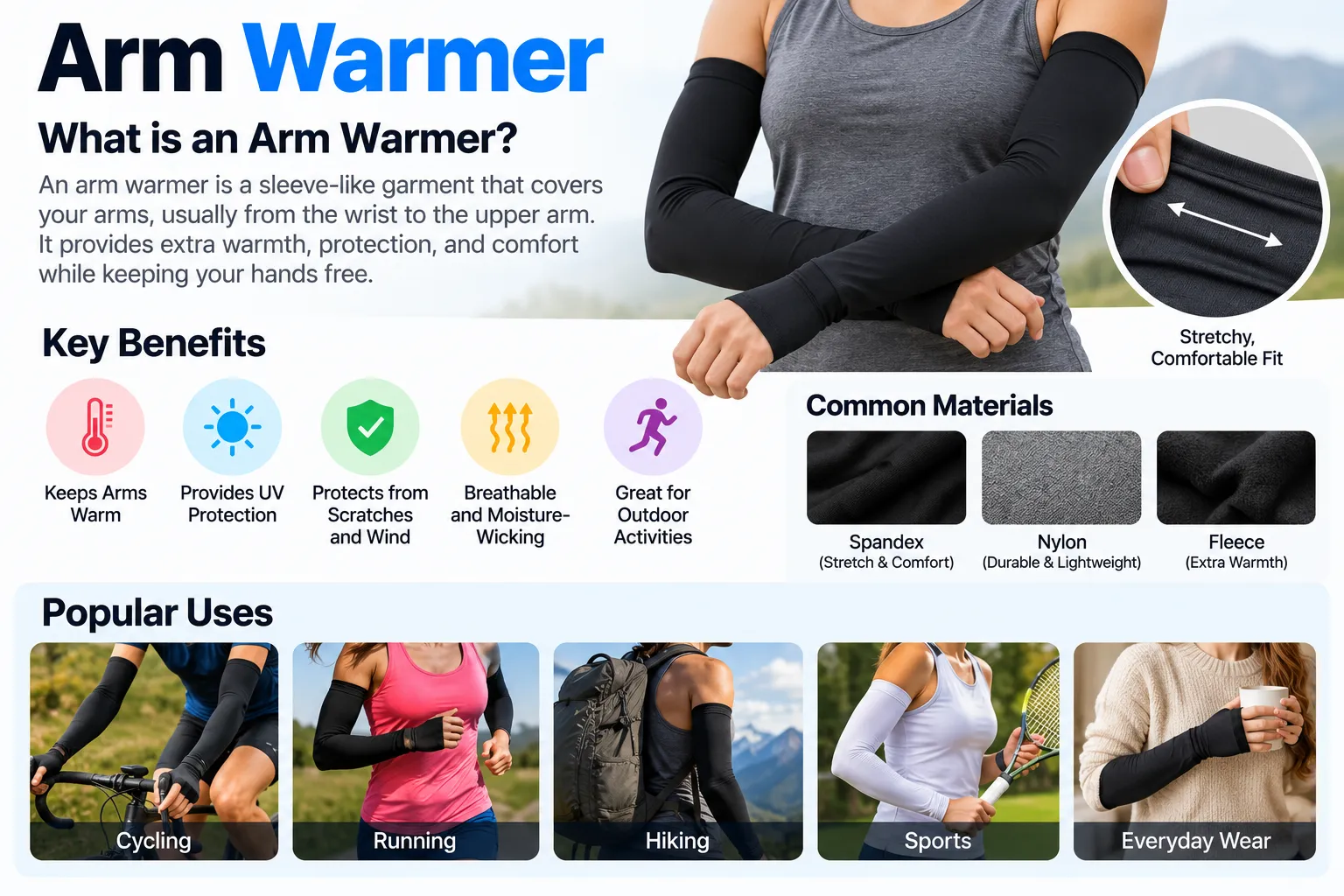
Arm Warmer Materials
Fabric choice affects comfort, warmth, stretch, and durability.
| Material | Main Feature | Suitable Use |
|---|---|---|
| Polyester | Lightweight and moisture control | Running and cycling |
| Nylon | Smooth and durable | Outdoor activities |
| Merino wool | Warm and temperature-regulating | Cold weather |
| Cotton | Soft and casual | Everyday wear |
| Spandex blend | High stretch | Fitness and sports |
| Fleece | Strong warmth | Cold outdoor conditions |
A polyester-spandex arm warmer can suit active users who want flexibility with sweat management. Merino wool can work well for colder conditions, while cotton may feel comfortable during relaxed indoor use.
Why Wear an Arm Warmer?
An arm warmer can solve a simple clothing problem: your arms may feel cold while the rest of your body feels comfortable.
For active users, a pair can also make changing layers easier. You can put them on before heading outdoors and remove them later without changing your entire outfit.
Common reasons for wearing one include:
- Extra warmth during cool mornings
- Protection from chilly wind
- More comfort during outdoor exercise
- Added coverage under short-sleeve clothing
- Easy layering during seasonal changes
- Protection from light sun exposure
- Convenient storage inside a small bag
Arm Warmers for Cycling
Cyclists frequently use arm warmers during cooler rides. They can provide extra coverage during an early start, shaded roads, or changing temperatures.
A cycling arm warmer should have enough stretch for natural arm movement. A secure upper cuff also helps keep the sleeve in place during riding.
Look for:
- Flexible fabric
- Snug but comfortable compression
- Moisture control
- Flat seams
- Secure cuffs
- Wind-resistant fabric for colder rides
A lightweight pair can also fit into a jersey pocket, making it practical for changing weather.
Arm Warmers for Running
Runners can use arm warmers during cool-weather training. They provide warmth around the arms without adding the weight of a full outer layer.
For running, fabric breathability matters. Excess heat can become uncomfortable during longer sessions, so a lighter material may suit moderate temperatures.
A running arm warmer should allow:
- Full elbow movement
- Comfortable wrist coverage
- Easy moisture management
- Secure placement during movement
- Minimal rubbing around the skin
Arm Warmers for the Gym
An arm warmer can also work during gym sessions, particularly during warm-ups or training in cooler rooms.
Some gym users prefer sleeves that provide light compression. Others simply want soft coverage during stretching, lifting, or low-intensity exercises.
A good gym option should feel flexible rather than restrictive. Stretch fabric can help the sleeve move naturally with the arms.
Arm Warmer vs Long-Sleeve Shirt
These two options serve different clothing needs.
| Feature | Arm Warmer | Long-Sleeve Shirt |
|---|---|---|
| Arm coverage | Yes | Yes |
| Torso coverage | No | Yes |
| Easy to remove | Very easy | Requires changing the shirt |
| Packing size | Small | Larger |
| Layering flexibility | High | Moderate |
| Sports use | Very suitable | Suitable |
| Temperature adjustment | Easy | Less flexible |
Arm warmers can suit situations where you want arm coverage without adding another full layer across your torso.
How to Choose the Right Arm Warmer
Fit should come first. A sleeve that feels too loose may slide down during movement. A sleeve that feels too tight may cause discomfort.
Check these points before buying:
- Size: Match your arm measurements with the manufacturer’s sizing chart.
- Length: Pick wrist-to-bicep coverage or a longer shoulder-reaching style based on your needs.
- Fabric: Select breathable material for exercise and warmer fabric for cold weather.
- Cuffs: Elastic sections can help keep the sleeve in place.
- Stretch: A flexible fabric supports natural movement.
- Seams: Flat seams may reduce rubbing.
- Thickness: Thin fabric suits mild weather, while fleece works better in colder conditions.
Arm Warmer Size Guide
Sizing varies between manufacturers, so measurements matter more than the label alone.
| Fit Type | Feel | Best For |
|---|---|---|
| Relaxed | Loose and easy | Casual use |
| Regular | Balanced fit | Everyday and sports |
| Compression | Close to the skin | Cycling and training |
| Heavy layer | Thick and warm | Cold outdoor use |
Measure the arm circumference according to the brand’s instructions. Check the sleeve length as well, especially for cycling or running.
Arm Warmers for Cold Weather
Cold-weather arm warmers generally use thicker materials or brushed interiors. Fleece-lined designs can provide extra insulation during low temperatures.
For outdoor winter use, look for fabric that blocks some wind and keeps warmth close to the skin.
A thicker arm warmer can pair with:
- A short-sleeve cycling jersey
- A T-shirt
- A lightweight jacket
- A thermal base layer
- A sports top
Layering gives you more control over body temperature without relying on one heavy garment.
Arm Warmers for Sun Protection
Some arm warmers serve a second purpose: skin coverage from sunlight. UV-rated fabrics can help reduce direct exposure during outdoor activities.
Cyclists, runners, hikers, and outdoor workers may prefer lightweight sleeves with UPF protection.
For sunny conditions, look for:
- Lightweight fabric
- Breathable construction
- UV protection rating
- Moisture control
- Comfortable cuffs
Sun-protection sleeves can also reduce the need for frequent sunscreen application on covered areas, though exposed skin still needs suitable protection.
How to Wash an Arm Warmer
Proper washing can help maintain fabric stretch and shape.
Follow the care label, but many sports arm warmers work well with these general habits:
- Wash with similar soft fabrics
- Use cool or lukewarm water
- Avoid harsh bleach
- Avoid high heat
- Air-dry based on the care label
- Keep hook-and-loop fasteners away from delicate fabric
High heat can damage elastic fibers in some garments, so check the manufacturer’s instructions before using a dryer.
Common Uses of Arm Warmers
An arm warmer can suit many activities beyond cycling and running.
Popular uses include:
- Cycling
- Running
- Hiking
- Gym workouts
- Walking
- Travel
- Outdoor work
- Dance practice
- Casual layering
- Motorcycling
- Sports training
Its compact size makes it easy to keep a pair in a backpack, sports bag, or travel case.
Arm Warmer Styling Ideas
Arm warmers can also work as part of a casual outfit. Neutral shades such as black, gray, navy, or white can pair easily with everyday clothing.
For a sporty appearance, match the sleeve color with shoes, shorts, or another accessory. A slim-fitting design can sit neatly under a jacket or vest.
The right style depends on the setting, fabric, and overall outfit.
Final Thoughts on Arm Warmer
An arm warmer provides a simple way to add arm coverage without adding a full upper-body layer. Cyclists, runners, gym users, travelers, and outdoor workers can choose from lightweight, compression, fleece, wool, and UV-protective designs.
Focus on fit, fabric, length, cuff security, breathability, and weather conditions before purchasing. A suitable pair can make cool-weather activities more comfortable while remaining easy to remove and store.
