
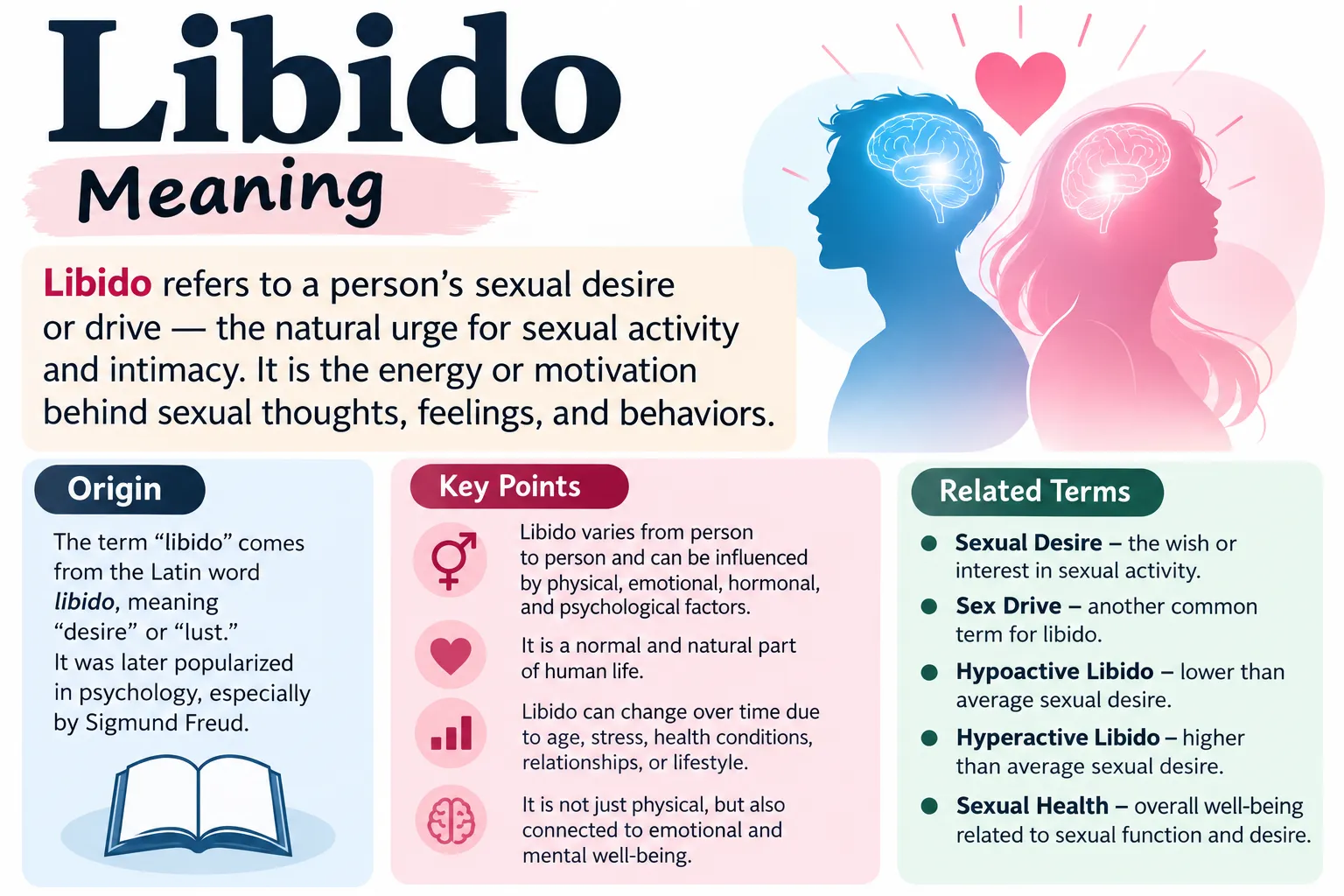
Libido meaning refers to a person’s sexual desire, sexual drive, or interest in sexual activity. The term appears in psychology, medicine, relationships, and everyday conversations. A person’s libido can be high, moderate, low, or change over time. There is no single level that applies to every person.
Libido does not describe a person’s behavior alone. It refers mainly to the desire or internal interest connected with sexual activity. Someone may have strong sexual desire and choose not to act on it. Another person may have little sexual desire and still have a healthy relationship.
What Does Libido Mean?
Libido means sexual desire or the urge for sexual activity. People may use the term to describe their general level of sexual interest or changes in that interest.
For example, a person might say:
- “My libido has increased recently.”
- “Stress has lowered my libido.”
- “My libido feels different from a few months ago.”
- “Medication may affect my sexual desire.”
The term does not automatically describe attraction to one specific person. It can refer to a general sexual drive.
Libido Meaning in Psychology
Psychology gives libido a broader history. Sigmund Freud used libido as a term connected with psychic energy and human desire, with sexuality playing a major role in his theory.
Modern psychology uses the word more specifically in many everyday settings. It usually refers to sexual desire rather than the wider concept used in classical psychoanalysis.
A person’s sexual desire can also relate to mood, self-image, relationship experiences, stress, sleep, hormones, and personal values. Human sexuality has many layers, so libido should not be treated as a simple measure of health or happiness.
Libido Meaning in Medical Terms
In medical language, libido usually refers to sexual desire. Healthcare professionals may ask about libido as part of a broader discussion about sexual health.
A change in sexual desire can have many possible causes, such as:
- Stress or emotional pressure
- Poor sleep
- Hormonal changes
- Certain medicines
- Alcohol or substance use
- Depression or anxiety
- Relationship difficulties
- Physical health conditions
- Major changes in daily routine
- Fatigue
A lower libido does not automatically mean a medical problem. Some people naturally have low sexual desire and feel comfortable with it. Medical attention may help after a sudden change that causes distress or appears alongside other symptoms.
High Libido Meaning
High libido means a strong or frequent desire for sexual activity. It does not automatically mean that a person has unhealthy behavior.
Sexual desire varies greatly from person to person. One person may want sexual activity frequently, while another may have little sexual desire. Both patterns can fall within normal human variation.
A high libido may feel natural for one person. For another, a sudden increase may feel unusual and may relate to changes in mood, medication, hormones, or other personal circumstances.
Low Libido Meaning
Low libido means reduced sexual desire or less interest in sexual activity. It can occur temporarily or persist for a longer period.
Common reasons may be:
- Stress
- Exhaustion
- Sleep problems
- Hormonal shifts
- Medication side effects
- Emotional distress
- Relationship tension
- Body image concerns
- Depression
- Anxiety
- Certain health conditions
Low libido deserves medical attention after a sudden shift causes personal distress, affects a relationship, or appears alongside other physical or emotional symptoms.
Also Check: Yandere Meaning
Libido and Age
Sexual desire can change at different stages of life. Puberty, adulthood, pregnancy, postpartum changes, menopause, aging, and hormonal shifts may all affect libido.
Personal health, emotional wellbeing, medication, relationship satisfaction, and hormone levels may also shape desire.
There is no universal “normal” libido for a particular age group.
Libido and Hormones
Hormones have a strong connection with sexual desire. Testosterone, estrogen, progesterone, thyroid hormones, and other biological signals can affect sexual function and desire.
Hormonal changes may occur during puberty, pregnancy, postpartum periods, menopause, or certain medical conditions. Hormonal medicines may also affect libido.
A person should avoid self-diagnosing a hormone problem based only on a change in sexual desire. A healthcare professional can assess symptoms and decide whether testing makes sense.
Libido and Mental Health
Mental health can affect sexual desire in several ways. Stress may reduce interest in sex for some people. Anxiety can create distraction or tension. Depression may reduce pleasure, motivation, and sexual interest.
Some psychiatric medicines can also change libido. This does not mean a person should stop medication without medical advice. A doctor or qualified healthcare professional can review possible side effects and discuss suitable options.
Libido and Relationships
Libido can affect romantic relationships, especially with different levels of sexual desire between partners. A difference in desire does not automatically mean that either partner has a problem.
Healthy communication can reduce pressure and confusion. Partners may discuss preferences, comfort levels, boundaries, affection, and expectations with honesty and respect.
Consent remains central to every sexual interaction. A person has the right to say yes, no, or not now.
Libido vs Sexual Attraction
Libido and sexual attraction describe related but different ideas.
| Term | Simple meaning |
|---|---|
| Libido | General level of sexual desire |
| Sexual attraction | Sexual interest directed toward a person or people |
| Romantic attraction | Desire for romance, closeness, or partnership |
| Sexual behavior | Actions connected with sexual activity |
| Arousal | Physical or mental sexual response |
A person can experience sexual desire without feeling sexual attraction toward a particular person. A person can also feel attraction without wanting sexual activity at a particular moment.
What Can Affect Libido?
Many physical, emotional, and social factors may shape sexual desire. A useful way to view libido is as something that can shift with circumstances rather than a fixed personal trait.
Major factors may be:
- Sleep quality
- Daily stress
- Exercise habits
- Nutrition
- Hormonal health
- Medication
- Mental health
- Relationship satisfaction
- Physical comfort
- Alcohol or drug use
- Personal beliefs and values
- Life changes
Libido Meaning in Everyday Language
In casual conversation, libido usually means sex drive. People may use the word in discussions about relationships, health, aging, hormones, or personal wellbeing.
Examples:
- “Her libido changed after a stressful period.”
- “His doctor asked about his libido.”
- “Sleep can affect libido.”
- “Libido differs from person to person.”
Is Libido the Same as Sex Drive?
Yes, in most everyday and medical contexts, libido and sex drive refer to the same general idea. Both describe sexual desire or interest in sexual activity.
“Libido” may sound more clinical or psychological, while “sex drive” feels more conversational.
Is High Libido Better Than Low Libido?
Neither level is automatically better. Sexual desire varies naturally among people, and a person’s preferred level may also change across life stages.
A more useful question focuses on personal comfort with the level of desire. A sudden change, distress, pain, or other symptoms may justify a conversation with a healthcare professional.
How Can Someone Support Healthy Libido?
Healthy sexual desire can benefit from general physical and emotional wellbeing. Helpful habits may be:
- Getting enough sleep
- Managing daily stress
- Staying physically active
- Eating a balanced diet
- Limiting excessive alcohol use
- Avoiding recreational drugs
- Discussing medication side effects with a doctor
- Maintaining respectful communication with a partner
- Seeking support for persistent anxiety or depression
Libido Meaning for Men and Women
Libido can vary among men and women, and individual differences are much more useful than rigid assumptions about gender.
Testosterone, estrogen, reproductive hormones, stress, medication, sleep, emotional wellbeing, and relationship factors may affect sexual desire in any person.
Talking to a Doctor About Libido
A healthcare professional may help after a sudden change in sexual desire, personal distress, relationship difficulties, or other symptoms.
A medical conversation may cover:
- Current medicines
- Hormonal symptoms
- Sleep and fatigue
- Mood changes
- Physical symptoms
- Relationship or emotional stress
- Recent lifestyle changes
A doctor can help identify possible causes and decide on an appropriate next step.
Libido Meaning in Urdu
In Urdu, libido meaning can be explained as jinsi raghbat, jinsi khwahish, or sexual desire. The exact wording may vary by context, yet the basic idea remains sexual interest.
Libido Meaning: Main Points
| Point | Meaning |
|---|---|
| Libido | Sexual desire or sex drive |
| High libido | Stronger or more frequent sexual desire |
| Low libido | Reduced sexual desire |
| Main influences | Hormones, mood, stress, sleep, health, medication, relationships |
| Normal level | Varies widely among individuals |
| Medical concern | A sudden or distressing change may need professional advice |
Final Thoughts on Libido Meaning
Libido meaning is simple: it refers to sexual desire or sex drive. The level of libido differs across people and may shift during different periods of life.
Hormones, mental health, sleep, stress, medication, relationships, physical health, and personal circumstances can all affect sexual desire. A high or low libido does not automatically signal a problem.
The most useful approach is to view sexual desire as one part of overall wellbeing. Personal comfort, consent, emotional health, and physical health matter more than trying to match an assumed standard.