
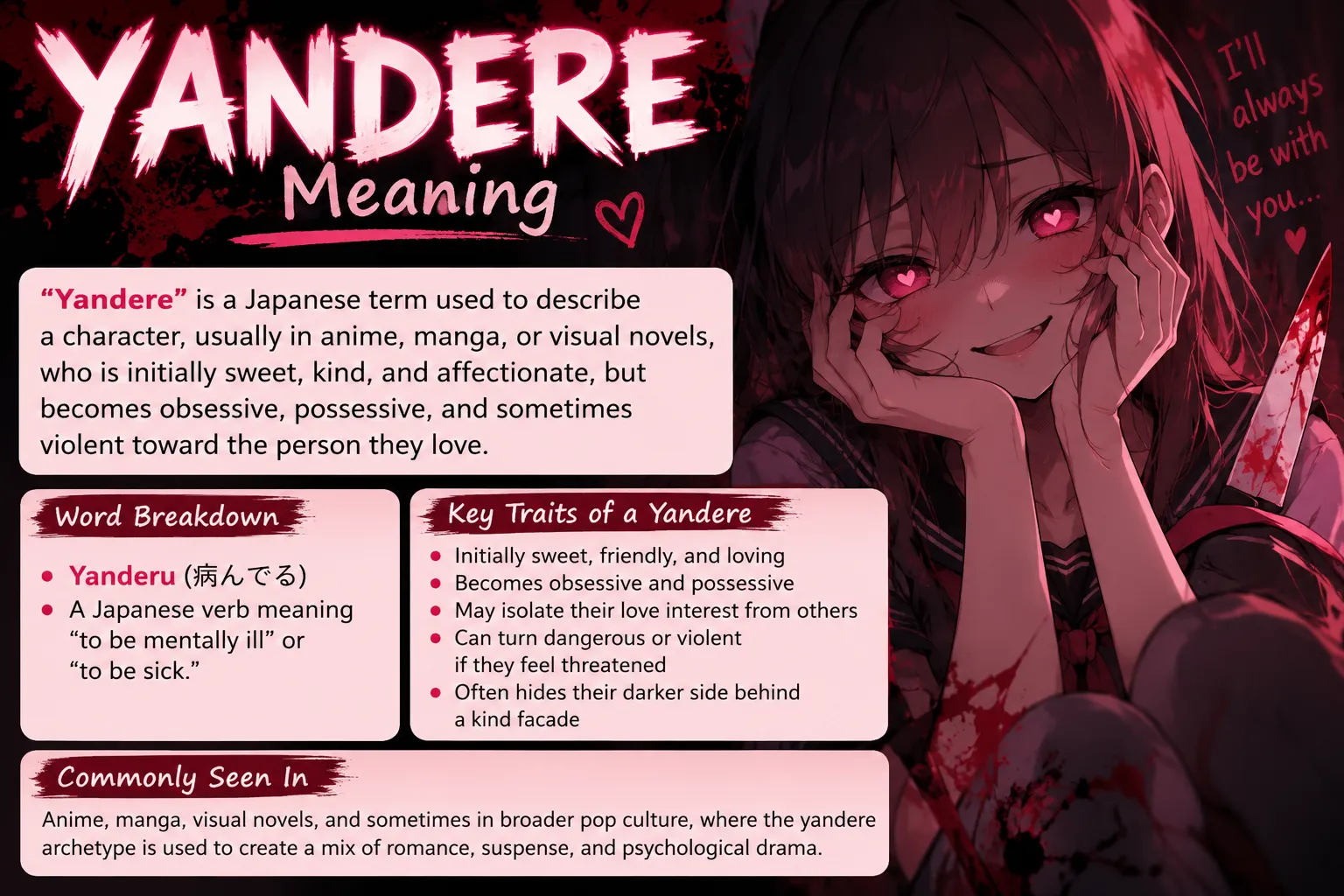
Yandere meaning refers to a fictional personality type linked with intense romantic affection, jealousy, possessiveness, and extreme behavior. The term comes from Japanese pop culture and appears mainly in anime, manga, visual novels, and games.
A yandere character may appear sweet, caring, shy, or deeply affectionate toward a person they love. Their feelings can later turn into obsession, control, jealousy, threats, or violence. This contrast between gentle affection and disturbing behavior gives the character type its distinctive appeal in fictional media.
The word has two parts: yanderu, connected with being mentally or emotionally unwell, and deredere, a Japanese expression linked with lovestruck or affectionate behavior. Together, the idea describes a person whose romantic feelings have taken an unhealthy and extreme direction.
In everyday online conversations, people also use “yandere” in a lighter way. A fan may call a fictional character yandere because that character becomes extremely jealous or protective, even without showing serious violence.
What Does Yandere Mean in Anime?
In anime, a yandere character usually begins with strong affection for another character. Their love may appear innocent at first. They may act caring, supportive, loyal, or protective.
The darker side appears through possessive behavior. A character may dislike anyone who gets close to their love interest. Jealousy can become intense enough to create threats, manipulation, stalking, or physical aggression.
The exact portrayal varies from one series to another. Some characters show only emotional obsession, while others reach much darker actions.
Common traits can be:
- Extreme romantic attachment
- Jealous reactions toward rivals
- Possessive behavior
- Fear of abandonment
- Strong emotional dependence
- Secretive actions
- Controlling behavior
- Threats against rivals
- Violent reactions in darker fiction
- A sweet personality that hides an unstable side
The term describes a fictional archetype rather than a medical diagnosis. Real mental health conditions are far more complex than the dramatic patterns used in anime.
Yandere Meaning and Japanese Word Origins
The word yandere combines two Japanese expressions associated with different sides of the personality.
Yanderu relates to being sick or unwell, including an emotional or mental sense.
Deredere describes affectionate, lovestruck, or openly romantic behavior.
The combination creates the basic idea of love that has become unhealthy or unstable.
| Part | General sense |
|---|---|
| Yanderu | Unwell, troubled, or emotionally disturbed |
| Deredere | Loving, affectionate, lovestruck |
| Yandere | Extreme romantic affection mixed with unhealthy behavior |
The English use of yandere comes largely from anime and manga communities. Fans use it as both a noun and an adjective. A person may say “She is a yandere” or describe a character as having a yandere personality.
7 Common Yandere Traits
Yandere characters can differ greatly, but several patterns appear repeatedly in Japanese media.
1. Extreme devotion
- A yandere character may focus nearly all emotional attention on one person. Their love can become the center of their life.
2. Jealousy
- Romantic rivals can trigger intense reactions. Even ordinary friendship may look threatening from the character’s point of view.
3. Possessiveness
- The character may act as though their love interest belongs exclusively to them. This can create controlling behavior.
4. Fear of rejection
- A yandere personality may have a deep fear of losing the person they love. That fear can fuel increasingly extreme actions.
5. Emotional instability
- Mood changes may appear suddenly. A gentle character can shift into anger or aggression after a perceived betrayal.
6. Secretive behavior
- Some fictional yandere characters hide their actions from everyone around them. Their outward personality may remain calm and friendly.
7. Violence
- The darkest examples use violence against rivals or even the love interest. This trait appears mainly in more intense fictional portrayals.
These characteristics create tension because viewers see two very different sides of the same character.
Also Check: Luften Meaning
Yandere Meaning in Simple Words
A simple definition is:
Yandere describes a fictional character whose romantic love becomes extremely obsessive, possessive, jealous, or dangerous.
For a shorter explanation, you can describe yandere as “an intensely lovesick character with a dark and obsessive side.”
The word usually refers to fictional characters, especially in anime, manga, games, and related fan communities.
Yandere vs Tsundere
Yandere and tsundere both belong to Japanese character terminology, but their personality patterns differ.
A tsundere character may act cold, rude, stubborn, or embarrassed around someone they like before showing affection. A yandere character generally starts from affection and develops a darker form of attachment.
| Trait | Yandere | Tsundere |
|---|---|---|
| Main emotion | Obsessive affection | Hidden affection |
| Common behavior | Possessive or jealous | Cold, shy, or argumentative |
| Romantic expression | Extremely intense | Usually restrained |
| Dark side | May involve threats or violence | Usually emotional conflict |
| Main concern | Losing the loved person | Admitting romantic feelings |
| Character tone | Sweet but dangerous | Tough but affectionate |
The biggest difference comes from the type of emotional conflict. Tsundere characters struggle to show affection, while yandere characters struggle to control extreme affection.
Yandere vs Yangire
Yandere and yangire can appear similar, especially in darker anime.
The main difference involves motivation. A yandere character becomes dangerous because of romantic attachment, jealousy, or obsession. A yangire character may become violent for reasons unrelated to romantic love.
| Character type | Main reason for extreme behavior |
|---|---|
| Yandere | Romantic obsession or possessive love |
| Yangire | Anger, trauma, personal conflict, or another trigger |
| Tsundere | Difficulty expressing affection |
| Kuudere | Calm or emotionally reserved personality |
This distinction helps prevent the word yandere from becoming a general label for every violent anime character.
Why Are Yandere Characters Popular?
Yandere characters create a strong contrast between affection and danger. A character may look gentle in one scene and become frightening in another. That emotional contrast gives writers many ways to create suspense and conflict.
Another reason comes from the fantasy of extreme devotion. A yandere character may appear completely focused on one person, creating a fictional form of absolute loyalty. The darker side transforms that devotion into something threatening.
Fans also enjoy discussing personality categories. Terms such as yandere, tsundere, kuudere, and dandere make it easier to describe recurring character patterns.
Online communities sometimes use “yandere” humorously. Someone may describe a fictional character as yandere simply because the character becomes jealous, protective, or unusually attached.
Yandere Characters in Fiction
Yandere characters appear across anime, manga, visual novels, and video games. Their personalities can range from mildly obsessive to extremely violent.
A famous example is Yuno Gasai from Future Diary. She is widely associated with the yandere archetype because of her intense fixation on Yukiteru Amano and her willingness to use extreme methods.
Another major example comes from School Days, a visual novel and anime series with darker romantic themes. The franchise helped bring the more disturbing side of the archetype to a broad anime audience.
Yandere Simulator also uses the concept as a central part of its game premise. The player controls Ayano Aishi, a character whose obsession with her love interest shapes the gameplay.
These examples show how creators can use the same basic personality concept in different ways.
Is Yandere Always Violent?
No. Violence appears in many dark portrayals, but the word does not require murder or physical attacks.
A character can show yandere traits through:
- Excessive jealousy
- Constant monitoring
- Possessive language
- Emotional manipulation
- Extreme fear of separation
- Obsessive romantic behavior
- Hostility toward perceived rivals
Some modern fan discussions also use the term casually for characters who simply display intense romantic attachment.
The level of darkness depends on the fictional work. A comedy may use yandere behavior for exaggerated humor, while a psychological thriller may use it for horror.
Can a Male Character Be Yandere?
Yes. Yandere does not have to describe a female character.
Many early and popular examples are female, which has helped create a strong association between yandere and female anime characters. Male characters can also fit the archetype.
A male yandere may display the same traits:
- Strong romantic fixation
- Jealousy
- Possessiveness
- Emotional dependence
- Fear of rejection
- Aggression toward rivals
The defining feature comes from the character’s behavior and emotional pattern, not gender.
Yandere Meaning in Internet Slang
On social media and anime forums, “yandere” can have a broader and more playful meaning.
Someone may call a fictional character yandere after seeing a jealous reaction, an intense confession, or an unusually protective scene. Fans can also use the term as a joke for exaggerated romantic behavior.
Examples of casual usage include:
- “That character has serious yandere energy.”
- “Her reaction was very yandere.”
- “He acts sweet, but there is a yandere side to him.”
These statements do not always suggest actual violence. Context decides the intended meaning.
Is Yandere a Real Personality Disorder?
No. Yandere describes a fictional character archetype rather than an official psychiatric diagnosis.
Anime and manga sometimes connect extreme behavior with mental illness in dramatic ways. Real psychological conditions do not follow the simple patterns seen in fictional characters.
Using yandere as a fictional label can be fine, but applying the term to a real person should be done carefully. Jealousy, obsession, possessiveness, or controlling behavior can have serious real-world consequences, yet those behaviors alone do not establish a mental health diagnosis.
Common Yandere Personality Pattern
A basic yandere character arc can follow this pattern:
- Affection — The character develops strong feelings.
- Attachment — Their emotional focus becomes centered on one person.
- Jealousy — Rivals start to feel threatening.
- Possessiveness — The character wants greater control.
- Obsession — Romantic feelings dominate their decisions.
- Extreme behavior — Threats, manipulation, or violence may appear in darker fiction.
Not every fictional character follows every stage. Writers can change the order, remove certain traits, or use the archetype for comedy.
Yandere Meaning Compared With Normal Romantic Devotion
Healthy affection and yandere behavior differ mainly through boundaries and control.
Healthy romantic affection allows two people to maintain personal space, friendships, interests, and independent choices. Yandere fiction takes affection beyond those boundaries and turns it into obsession or possession.
| Healthy affection | Yandere-style fiction |
|---|---|
| Trust | Suspicion |
| Personal freedom | Possessiveness |
| Respect for boundaries | Control |
| Emotional support | Emotional dependence |
| Shared affection | Obsession |
| Healthy communication | Manipulation |
| Acceptance of rejection | Extreme reaction to rejection |
This distinction makes the term easier to understand without treating fictional behavior as a model for real relationships.
Why the Yandere Archetype Works So Well in Fiction
The archetype creates immediate emotional tension. A character can appear harmless, loving, and dependable while hiding an increasingly dangerous obsession.
Writers can use that contrast for romance, psychological horror, comedy, suspense, or drama. The same character type can therefore fit very different genres.
The yandere concept also creates questions about love, jealousy, trust, and personal boundaries. Those themes give fictional relationships extra tension without requiring a complicated premise.
Yandere Meaning: Final Takeaway
Yandere meaning centers on an extreme form of fictional romantic attachment. The term describes characters whose affection becomes obsessive, possessive, jealous, emotionally unstable, or dangerous.
The word combines ideas related to being unwell and being lovestruck. Anime and manga use the concept mainly as a character archetype, while online communities may use it more casually.
The easiest definition to remember is:
Yandere = intense romantic affection taken into an obsessive or dangerous direction.
The character can be male or female, gentle or aggressive, comedic or frightening. Violence can appear, but it does not define every use of the term. The main idea remains extreme romantic fixation and the dark behavior that can develop around it.